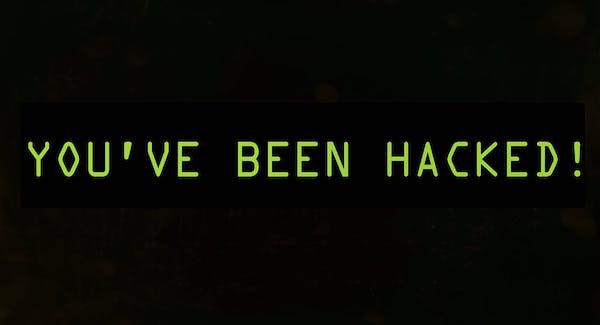
Congratulations, You’ve Been Hacked! Now Here is How to Never Let it Happen Again
Few sentences in the English language possess the elegant, understated charm of "You’ve been hacked." Usually delivered in a flashing neon-red font on a screen that used to hold your tax returns and family photos, it is the digital equivalent of waking up to find a raccoon wearing your tuxedo and driving your car into a lake.
It is a deeply moving phrase. It inspires immediate introspection, mostly involving questions like, "Was clicking on 'Hot Local Steaks In Your Area' a mistake?" and "Why did I think my router password should just be the word 'password' backwards?"
Naturally, the immediate impulse of any modern cyber-victim is to take to the information superhighway. You want to google "how to fix a hacked computer," read a 14-page forum thread from 2018, and download a questionable anti-malware tool that will inevitably hack you a second time.
There is, however, a slight logistical hiccup in your specific situation.
The anonymous mastermind behind your digital demise didn't just steal your Netflix password and sign you up for Norwegian cruise ship newsletters. They went old-school. They completely liquefied your operating system and bricked your router so comprehensively that the little green blinking lights have given up and turned into a single, sorrowful wisp of grey smoke. Your computer is no longer a gateway to the global community; it is an expensive, humming paperweight. Your router is now just a plastic coaster that smells like burning hair.
You are entirely, permanently, and beautifully offline.
But fear not! Just because you will never, ever be able to access the internet again does not mean you shouldn't practice good cyber-hygiene. Here is a definitive, fool-proof guide on how to prevent your system from ever being hacked again—even though your system no longer technically exists.
1. The Ultimate Firewall: Physical Destruction
Cybersecurity experts talk all day about "firewalls" and "intrusion detection systems," but these are bloated, fallible software solutions. The only 100% effective firewall is a standard claw hammer.
Since your computer is already crippled, take this opportunity to finish the job. Smash the motherboard into a fine, glittering dust. Smash the router until it resembles a pile of broken LEGO bricks. Hackers cannot infiltrate a device that has been converted into gravel. If a cyber-criminal attempts to ping your IP address, their signal will hit the void and bounce back with a profound sense of existential dread. You win.
2. Upgrading to the Cloud (The Literal Sky)
Now that your router is dead and the internet is a distant memory, it is time to migrate your data to a more secure platform. We recommend a notebook and a ballpoint pen.
Pros: Zero vulnerability to ransomware; cannot be breached by a teenager in Eastern Europe; highly portable.
Cons: Vulnerable to spilled coffee, mischievous dogs, and fire.
If you absolutely must send a message to someone, do not look for a Wi-Fi signal. Write your message on a piece of paper, tie it to the leg of a pigeon, and throw the bird out the window. Good luck hacking a pigeon, you anonymous cowards.
3. Change Your Posture, Not Your Passwords
People waste hours creating complex passwords like Tr0pical!Storm_947#. This is foolish. Since you no longer have an internet connection to protect, you can change your daily real-world security posture instead.
Whenever you walk past a mirror, look at your reflection and say, "You've been hacked." This builds psychological resilience.
If anyone asks you for your Wi-Fi password, laugh hysterically for three uninterrupted minutes until they slowly back away.
4. Lean Into the 1890s Lifestyle
Look at the bright side: the hacker didn't destroy your life; they gave you your freedom back. You no longer have to read political arguments on social media. You never have to "Accept All Cookies" again. You don't have to look at photos of your high school acquaintance's sourdough bread.
You are now a creature of the earth. Go outside. Churn some butter. Learn to forge iron. Build a log cabin. If a hacker wants to steal your identity now, they’ll have to physically ride a horse to your property and challenge you to a duel. And frankly, that takes a lot more effort than sending a phishing email.
In summary, getting hacked and having your entire digital infrastructure permanently crippled is actually the best cybersecurity defense mechanism available on the market today. It is unpatchable, un-bypassable, and totally free.
So, raise a glass of water to the smoking ruin of your router. You are finally safe.
Advertisement
PICK MYPOSTCODE
The UK’s Biggest 100% FREE Daily Draw!
Over £3 Million won so far! No cost, FREE to enter, no hidden fees, and zero catches. Just pop in your postcode and check daily to see if you’ve landed the jackpot.
✔Multiple Daily Chances: Win across the Main Draw, Video Draw, Survey Draw, Stackpot, and Flash opportunities.
✔100% Legit & Trusted: Fully ad-funded model frequently recommended by top financial consumer sites. Highly rated with an Excellent 4.8/5 score on Trustpilot.
✔Loyalty Bonuses: Build up bonus cash every single day you check in.
Ditch the mobile contract drama and price rises? Switch to the network built to be fair and transparent. Part of Three and Vodafone Networks with overall smarter 5G coverage
✓No Annual Price Rises: The price you choose stays.
✓Complete Flexibility: Change anytime, monthly rolling plans.
✓Massive Coverage: 99% UK outdoor network footprint.